


Mikhail Dubakov is the founder of the Targetprocess IT product company, which develops Agile-based project management systems. Over the 15 years of Targetproscess's existence, more than 1,000 businesses in 80 countries have used the products of the company. In April 2018, Targetprocess attracted $ 5 million in investment from Zubr Capital and the EBRD. Six months later, the staff of the company, where about 100 people worked, was reduced by 18 employees due to a significant slowdown in growth rates. In an interview for The Heroes, Mikhail Dubakov talks about personal mistakes, the opacity of Belarusian entrepreneurs and personal feelings about losing money during the 2013 crisis.
— When the issue of attracting investments from the EBRD and Zubr Capital was discussed in 2017, one of the employees compared your company with a flock of sheep that run wherever they want. Has this feeling changed after you raised capital from outside?
— Yes, I think that has changed. Now there’s a much clearer direction, clearer plans, clearer requirements and metrics — now we have to be in a certain place at a certain time. If we’re not — that’s not very good, that might cause a reduction of personnel, for example. The clear plans partly narrowed the freedom. Not much has changed at the level of teams, but the leaders of directions have more responsibility and less freedom.
— Did you subsequently receive any feedback from this person?
— Yes, he works for us now. In general, he likes what’s going on here. Apart from the alignment of some sort, there’s always also a rejection of it. If the company goes one way, there are those who agree with this. But there are a number of people who say «we’re going in the wrong direction, we don’t need to go there, we don’t like it». People express this openly. Specifically, this person likes the changes — he works in sales, there are more interesting case studies, more interesting clients. Big companies are much more interesting than selling to very small companies. But all this movement in the direction of an enterprise isn’t very easy — the company's culture is undergoing changes, and not everyone likes it.
— How many people left after you raised money from outside?
— Three or four people left. They all left for various reasons — one moved to another country, the other got a job that he had long wanted. As far as I know, no one left because we raised capital. But it’s still coming — I expect that a few more people will leave the company in the near future. But this is the inevitable price of change.
— You used to be against attracting investment from the outside. How did you decide to take this step?
— Actually, we started looking for investments about 3 years ago. At some stage, it becomes clear that you need some extra money if you want to grow quickly. You can grow slowly with your own earnings if you work at a profit but it is rather difficult to grow quickly this way. Sometimes it works out but in general, it’s not typical. Usually, you need some kind of boost, and finances allow you to create it within 1-2 years. The boost can be positive and give good growth but it can also be negative — no one knows for sure! However, there is an opportunity to try. For example, the organization of a normal marketing or sales department in the USA requires a one-time investment of several hundred thousand dollars and a couple of hundred thousand monthly for six months, until they start working.
Finding this money is quite difficult if you’re developing by bootstrapping. Therefore, at the stage when we reached a number of 100 people, we realized that we need venture capital if we want to build something serious in our market. By that time, our competitors had investments from outside, and we remained almost the only company that worked without them. We were slowly looking for venture capital — «maybe it’s not necessary, maybe it is?». Of course, there were constant doubts. Then there were contacts with Russian funds, but we refused that.
Two years ago we began to look for capital quite confidently. First, we found the EBRD fund in London. Everything spun pretty quickly from there.
The EBRD needed a partner, and they found Zubr Capital. By an amazing coincidence, we work in the same building, so it was very convenient to organize all the negotiations. Then there was a rather long due diligence process of checking the company — Zubr Capital approaches these things very carefully. VC-funds work faster, and Zubr is, after all, private equity, and the transaction was not typical for them. It is also important that they are investing in companies that operate in the local market and in the CIS countries, while we operate mainly in the American and European markets. The process took quite a long time, but in the end, we liked each other.
That's all, the deal was closed in April 2018, and now we are developing quite quickly, but it’s difficult to talk about some results for now. Maybe by March, it will be clearer how successful or unsuccessful these investments were — whether we succeeded or not.
— On what terms do you work with EBRD and Zubr Capital?
— We have completely normal, adequate conditions, they are no different from the conditions of Western funds. There are no «strange» conditions. I can’t disclose any specific figures, but these conditions are quite adequate — as if we came to an American investor. When we came to the Americans, we were offered about the same conditions. Zubr Capital, in my opinion, makes quite adequate requirements and so does the EBRD.
I don’t know about the others, because there aren’t too many investors in Belarus. A couple of funds opened — Haxus, Bulba Ventures, but these are completely new, they’ve operated a year or two. I haven’t communicated with them, so I can only speak about our deal, and it was OK. It should be understood that Zubr Capital mainly works with companies that focus on the CIS market. They have a traditional business, a transfer business, which is completely different from ours. In our example, they are studying business that works for the United States and the West.
I wouldn’t say that they bring a huge amount of expertise in these things because they don’t have it, but they know how to organize everything in the CIS countries.
One piece of their advice was a proposal to make one of our business areas focused on the CIS countries. «There is money there, trust us, ” they said. We didn’t believe that there was money there but just recently we were convinced that in fact there is money there. And this is a piece of advice that we should probably consider.
Of course, our situation is quite unique for them, so I wouldn’t say that their expertise greatly helps. If they came to some traditional business, they have a lot of expertise there — Oleg Khusaenov is a very experienced businessman who knows a lot of things. But the software business has its own specifics. Especially in such software as ours. Zubr Capital learns this from us, and we learn financial discipline and get a fresh look at the markets of the CIS from them.
— How much do you rate your company now?
— I can’t answer this question. Really, this is simply confidential information, which I can’t disclose by agreement with investors.
— OK, but we are talking tens of millions of dollars?
— Yes, about that.
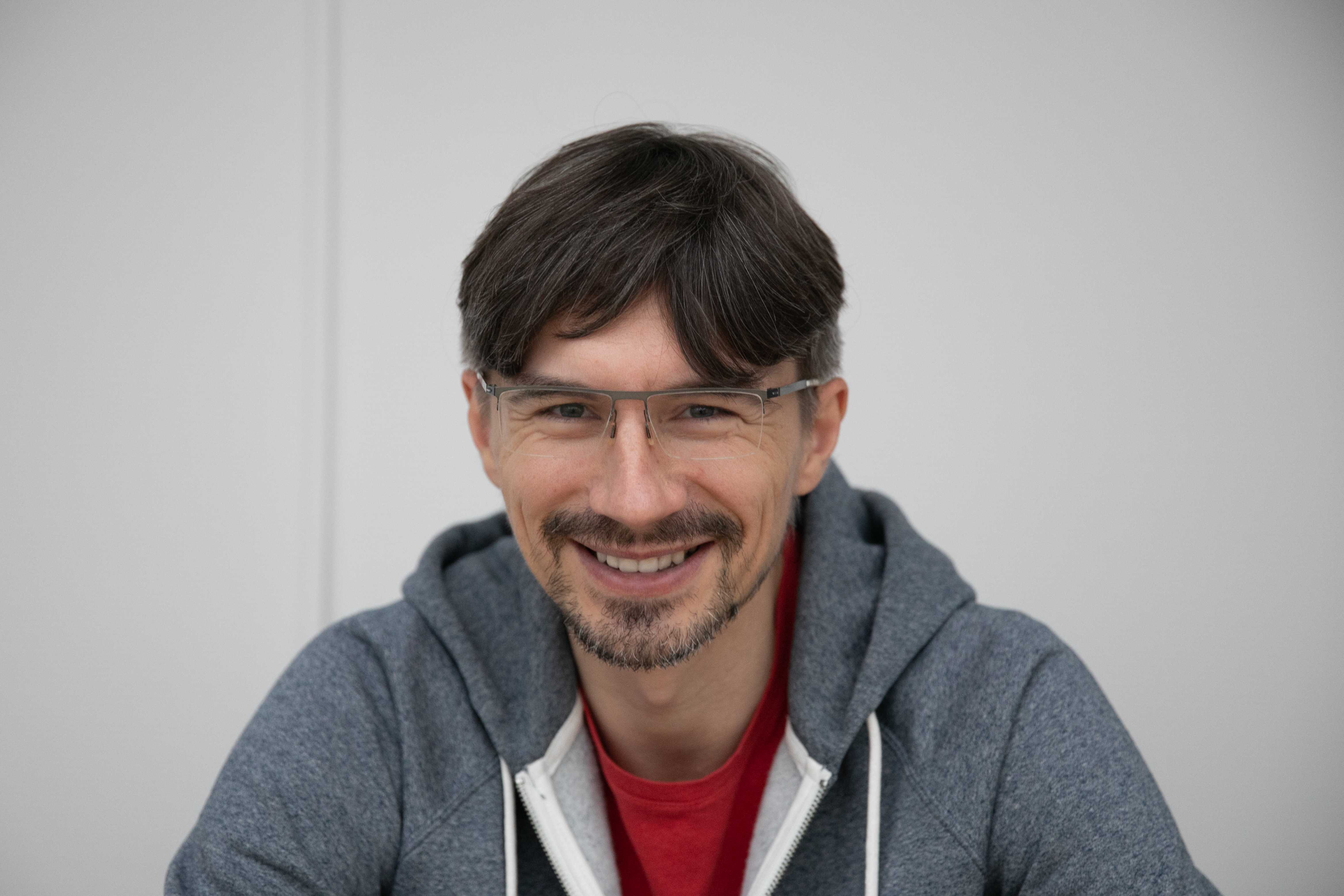
— You don’t create the impression of a person who owns such a big company. You’re very simply dressed, you look very simple, and you behave very simply. How to prevent «stardom disease» when you create a huge business and start to earn a lot?
— To earn a lot is a relative question, although, compared with teachers, I probably earn a lot. Nevertheless, in comparison with some successful businessmen in Belarus, I don’t have millions of dollars in accounts, for example. I don’t feel like a rich man. If I have a share in a company that costs some tens of millions of dollars — OK, but this is not money, it’s just a share in the company. Yes, I feel free, I live as I want. But I live modestly enough, wealth is not a goal for me.
There’s a range from $ 50 to 100 thousand per year, which is enough for life anywhere in the world, including Belarus. Everything above is just showing off. «I'll buy myself a Bentley,» «I’ll go to a five-star hotel for ten thousand a day.» What’s that for?
Maybe there’ll be something better there, but the «price-quality» is no longer adequate. To me, these show-offs, to be honest, cause a negative attitude. Although it’s probably wrong, it’s better to treat such things with indifference. For me, it’s important to do interesting things and do what I like. I like making products. I like writing good articles. This is what I try to do. Money is, by and large, just oxygen for a business. I don’t see it as a goal. The goal for me is to do cool things that people need and that people would like.
— What factors need to be considered to please an investor for five million dollars?
— It’s very simple. If you have high growth rates, nothing else is needed — they will immediately like you! The growth of at least 30% is a more or less attractive story. Of course, it depends on the phase of the business. If you’re a very «early» business, then 30% growth is not enough. If you’re a «mature» business, then 10% is still normal and interesting for the funds. If the growth is less than 30%, representatives of the funds will look suspiciously and ask, «Why are you so slow, guys?». And, of course, there must be a very good team. Investors carefully look at people, they speak not only with founders but also with key people in the company.
Of course, the founders are looked at first of all. If investors like you in a conversation, if you can convince them that you know where to go and what to spend money on, then your feeling of confidence and your vision may greatly influence the final decision.
Even if the indicators are not very good, your confidence can close the deal. Our average growth rate was about 30% per year. Probably we slowed down and showed about 20% in the last year. For a company of our size with bootstrapping, this is normal. Let's just say this is enough to attract investment.
— You have repeatedly stated that Jira is your main competitor. Are you afraid that they will outrun you?
— They already did, we’ve already lost. It must be understood that we used to be at the level of teams on the IT soft development market. Targetprocess uses many teams around the world, but we’ve already lost this team level to Jira. When we come to new companies today, Jira is installed everywhere at the team level. Now we can compete with Jira only at the level of the so-called Scaled Agile, when something above teams is needed, for example, to manage Agile processes at the level of departments, divisions or the whole company. That's where Jira has no good solution, and we’ve been moving into this niche in the past 18 months. But the team level is completely lost for us. Here we can objectively say that Jira won, and we lost, so we’re moving to another niche and try to feel good there.
— Why?
— Probably the most important thing is that Jira started a little earlier and looked at the situation a little better. They knew better what the developers wanted. We were distracted from the developers at some point and began to engage in some things of a higher level.
Jira constantly kept a very clear focus, and even now they don’t want to go to a higher segment but focus on teams. They expand horizontally, begin to support different types of teams. We went up, and as soon as we did, after a few years, we lost the level of teams.
But this was our strategic decision, and it is rather difficult to say whether it was good or bad. Maybe if we stayed at the same level, we would’ve lost it anyway — god knows. Still, Jira developed much faster, they had a lot more investment. Therefore, we’re not fighting with them anymore, we coexist in different niches.
— What are the three main mistakes you made in 14 years of running a business?
— Probably one of the main mistakes was to stay engaged in a product for a couple of years when it wasn’t interesting for me anymore. This is my serious mistake as the owner of the product, which seriously slowed down the development of the product. This is probably the first and the main mistake. The second mistake was that we didn’t start looking for investments earlier. It had to be done in 2009-2010, well, at the latest in 2011. But we started to do it in 2015, and «closed» only in 2018. It’s too late, we lost a lot of time and missed the point when it was necessary to accelerate, but we slowed down. The third mistake is probably related to some people whom I didn’t hire, and I regret that I didn’t. And, conversely, I often postponed the moment to dismiss some people — and this never had a happy ending.
— Considering your personal experience and the refusal of earlier attracting investment, which you now regard as a mistake, answer, please, should young businesses be afraid of taking other people's money?
— It very much depends on the philosophy of the founders. Now there’s a philosophical direction in business when people say that they are doing business without external investments — it is now experiencing a renaissance. Quite a lot of successful companies are now starting to work that way. If we look at the software, the most expensive and the only thing you pay a lot for is the programmer's time. They may work either without receiving a salary in exchange for equity, or they may receive a salary and not have equity. Why am I talking about this? Often you can gather a team without money, which can work in a garage for a year.
— With no money at all?
— Yes. And when the product is already on the market, you can reach the point of profitability very quickly. Take Slack, for example. Well, they had investments, but the team that made Slack was just 9 people. They did it in a year and showed the fastest rise of a B2B company in all time. They took money simply because it was given on such conditions that it would be foolish not to take it. As their founder said, «We were given 100 million at a valuation of $ 1 billion, well, ok, why not take it?». It all depends on how the founders look at foreign investments.
By default, probably everyone wants to take money — this is the airbag, which gives some time. But we must understand that with the money usually comes some additional responsibility — external control, reports, loss of time at the negotiations.
All this distracts from the business. You don’t sell, don’t develop the product. What you need are the right investors who understand how everything works, who once gave money and then they come to you, only if they see that something is going wrong, and only at the level of advice «we advise you to do so because our experience suggests it.» They act as an advisory board, to which you may listen or not. They don’t prevent startups from trying something on the market, getting feedback and developing.
It’s difficult for me to give definite advice «just take the money». I can’t say that. It depends on the person’s situation, on the size of the team he wants to gather, on how quickly he wants to grow. There are businesses that are simply impossible without external financing. If you want to do something significant and immediately, and you need a team of 100 people for this, then you won’t gather 100 people just like that. If you want to make a mobile application or a simple B2B product for SME, this can be done by a very small team of 2-3 people in six months. Perhaps this can be done without money. The question of attracting foreign investment is quite complicated, and everyone must answer it for himself.
— In 2013, during the banking crisis in Cyprus, part of bank deposits was confiscated from foreign investors. How much money did you lose then as a founder?
— I don’t think I can answer in absolute terms, but not very much. At the time of the crisis, the company lost several hundred thousand dollars there. As a founder, I lost some part of this amount. Well, it was an unpleasant story — all accounts were closed. But the company was working with a profit then, so this didn’t come as a kind of a shock for us. It was unpleasant, but we quickly got out of this situation after a few months.
— What did it feel like?
— I felt angry because it was a rather inadequate solution. I understand that perhaps there was such a situation in Cyprus that the government couldn’t take any other decision. But why the hell should private companies suffer? But what’s done is done. Of course, after all this, I don’t really trust Cyprus.
Now, it’s probably no worse to open an IT business in Belarus than in Cyprus.
Cypriot financial system is still unstable. It’s better not to keep money in banks there, to be honest. We simply don’t have money in our Cypriot accounts, it’s all in other banks. By the way, this is what Zubr Capital helped us with. They have rich expertise in where to keep the money.
— How do you feel about the recently given opportunity to use English law in Belarus?
— I am incredibly positive about what is happening. The signals that come from all different angles are very good. If this continues for a few more years, then undoubtedly, the world's trust in Belarus will increase substantially. The development of the HTP with the appointment of Yanchevsky received an incredible impetus. Nobody expected this but the results speak for themselves. He did something incredible, in my opinion. I will not be shy in expressions. He changed the way companies are accepted at the HTP. The permissive principle is used now — «if you want, we will accept you, and then the market will show what company you are». There used to be a very careful selection, very difficult procedures, and many companies simply didn’t want to go through this. The adoption of the decree, which extended the favourable conditions for the HTP residents, introduced English law and other additional things — well, yes, this is all very cool.
The President’s statements in relation to businessmen are now becoming more positive, the abolition of criminal prosecutions for economic cases — all this, of course, is very positive.
It is clear that most businessmen don’t violate the law on purpose. And anything may happen by chance. Imprisoning someone for five years for such a thing is rather strange. Let a person compensate for what he misunderstood or even intentionally committed, but why put him in prison for five years? Weird. Such rudiments of the Soviet era must go.
— How would the economy of Belarus be affected if such conditions were transferred to business areas other than IT?
— That is a very difficult question. Our IT sphere is quite unique — it was developing without the HTP as well. The HTP, of course, simplified and accelerated all this, but I wouldn’t say that the IT sphere would be sad without the HTP. No, everything would be more or less good. I do not think that the introduction of legislation similar to the HTP would help MAZ or the tractor plant. I understand that there is a problem of social employment, that tens of thousands of people work there, and they need to do something with them, but in general, Belarus needs to develop high-tech production, all sorts of intellectual things related to IT. Heavy machinery is still closer to the USSR. I don’t understand why we need to keep this assembly shop of the Soviet Union. Transferring preferential conditions to such companies is unlikely to help them with anything — in fact, they should not exist at all. Agriculture? Maybe it would make things easier for farmers, although I think they already have some preferences. I’ve never really thought about it. Probably, it’s too early to say, the HTP should work for another two or three years. But I would make such experiments. This is probably correct. Maybe, by some geographical principle — take, for example, the Grodno region and set up such an experiment there. See what happens.
Without experiments, we can come up with some theories, but the test practice, most likely, won’t confirm our theories. Therefore, the best solution is to try.
In software development, we do the same. Not sure about something? Conduct an experiment, look at the result. The scientific method works everywhere.
— What was the toughest criticism of you from your employees? How did you take it?
— Probably in 2016. I estranged from the product because I got tired of it in 12 years. People felt that and started writing to me that they didn’t feel my involvement, a distance appeared, and everything became worse. This was objectively so, but I may not have noticed it. I read these reviews and realized that the situation was really not very good, and it needed to be corrected.
— Have you ever had a desire to leave the company and give up everything?
— Yes, but this desire began to emerge after 12 years. In the first 10 years, the desire to quit didn’t arise at all — I liked what I was doing. Then I became bored with the domain. When you plunge into the project management system and spend 10 years in this all, it’s starting to seem that there are more interesting things, which began to appear then — machine learning, blockchain and stuff.
The desire to give up everything had nothing to do with the people, but with the domain. The area in which the company was engaged became less interesting to me. Gradually, I moved away from the tasks of the manager and owner of the product; now, someone else is engaged in this. I should’ve done this earlier. If the interest is lost, this is the point at which it is necessary to leave the product and stop dealing with it. Pass it to another person who is interested. You will find other activities for yourself.
— Who do you think is the toughest businessman in Belarus today?
— If we talk about someone who has the most developed sense of business, it’s the Gurskys. They feel that something will work out — and it does! A unique story. They’re definitely very tough businessmen.
— And which three Belarusian IT companies do you consider the most promising in terms of opportunities for scaling and growth in foreign markets?
— PandaDoc, they also have a product model, and they can make a very big story out of it. If we talk about outsourcing, this business is not very close to me. I understand it, but I don’t like it, to be frank. In recent years, EPAM has begun to do very cool things. They’re transforming, they’re doing great events in Belarus. From a typical outsourcer, EPAM has evolved into a company that drives IT forward in Belarus. They plan to open a university, this is very cool. But EPAM doesn’t fit the category of «promising», they’re already an established company. I don’t read a lot about Belarusian startups, so it’s quite difficult for me to say that some company will do great in the Western market in the near future. There are interesting projects, but it’s hard for me to say how big their stories may be. To be honest, I can’t name anyone except PandaDoc.
Perhaps this is part of the mentality. People are afraid to be frank and afraid to be transparent. They are afraid to say some things that, perhaps, show some events in the company in a bad way, show some bad decisions.
People start talking about it little by little, but it happens very slowly. For example, I’m not at all afraid to say that we made a bunch of mistakes. But if you often read some interviews or materials about some companies, those texts are mainly about how everything is good for everyone, everything works nice and in general, everything is cool. You read it and it just becomes boring because you understand that it is not true. Of course, there are problems that are simply not mentioned. Journalists are also to blame for this — they don’t ask sharp questions.
When journalists come to me, I tell them, «You can ask me about anything, I will answer all your questions — except for finances because I have an NDA». There is a lack of proper work with the media, lack of frankness and transparency. It’s not at all interesting to read all those «advertising» articles about companies. You don't even remember them. You scrolled through them and that's it. Very few articles are remembered. Now there are more of them, but still very few.